For dark spots, prioritise one targeted brightening serum (alpha-arbutin with vitamin C), a barrier-supporting moisturiser, and a broad-spectrum SPF worn every day. The SPF is what protects your results, so treat it as essential rather than optional.
What to look for
The most useful pigmentation products combine a targeted brightener with ingredients that keep the skin barrier comfortable, because irritation can worsen the very marks you are treating. Look for a serum built around alpha-arbutin and vitamin C, supported by niacinamide, rather than a single high-strength acid.
Just as important is what sits around the active: a moisturiser that keeps skin calm, and a daily broad-spectrum SPF. Without daily sun protection, pigment driven by UV and heat tends to return, so an SPF is part of the treatment, not an add-on.
The doctor's picks
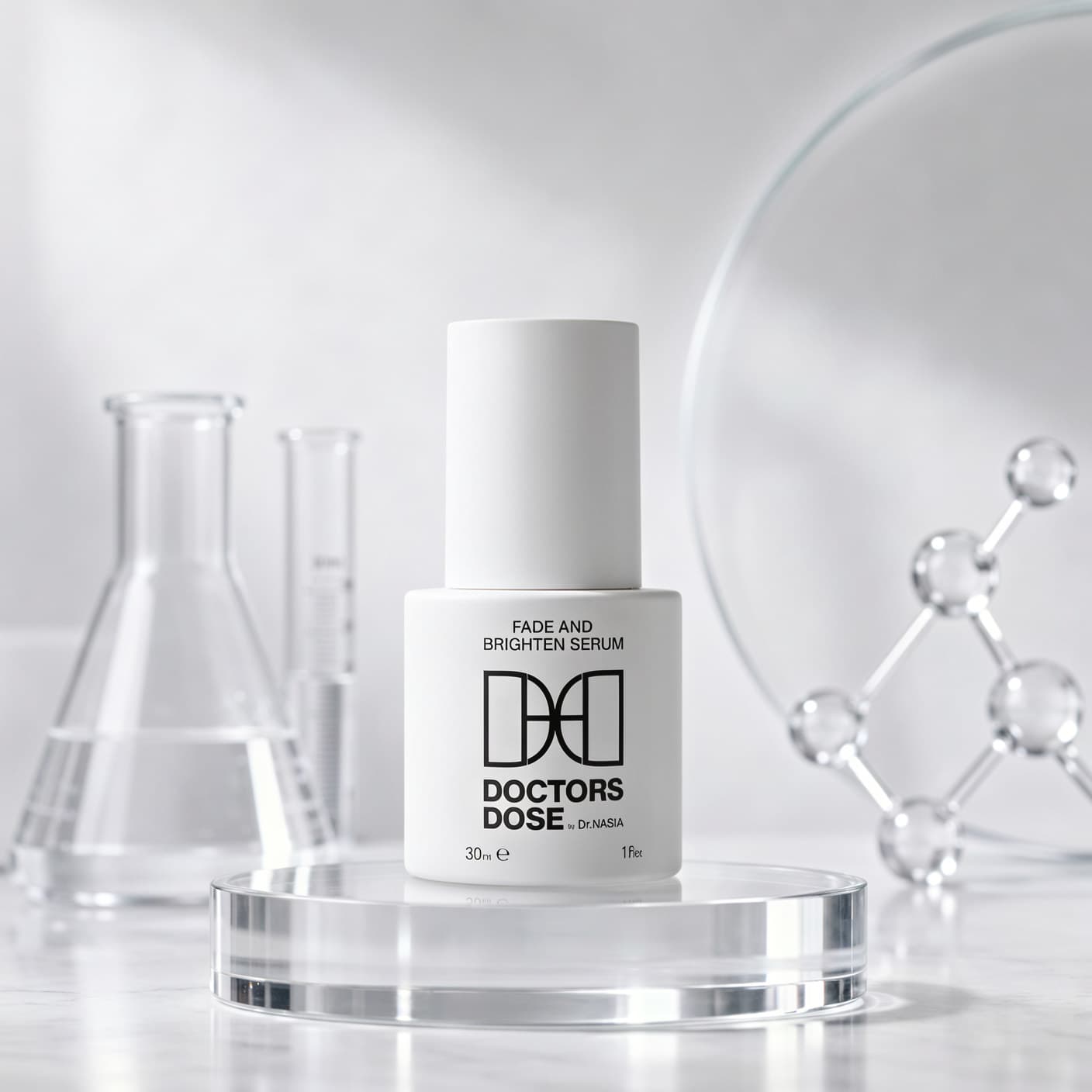
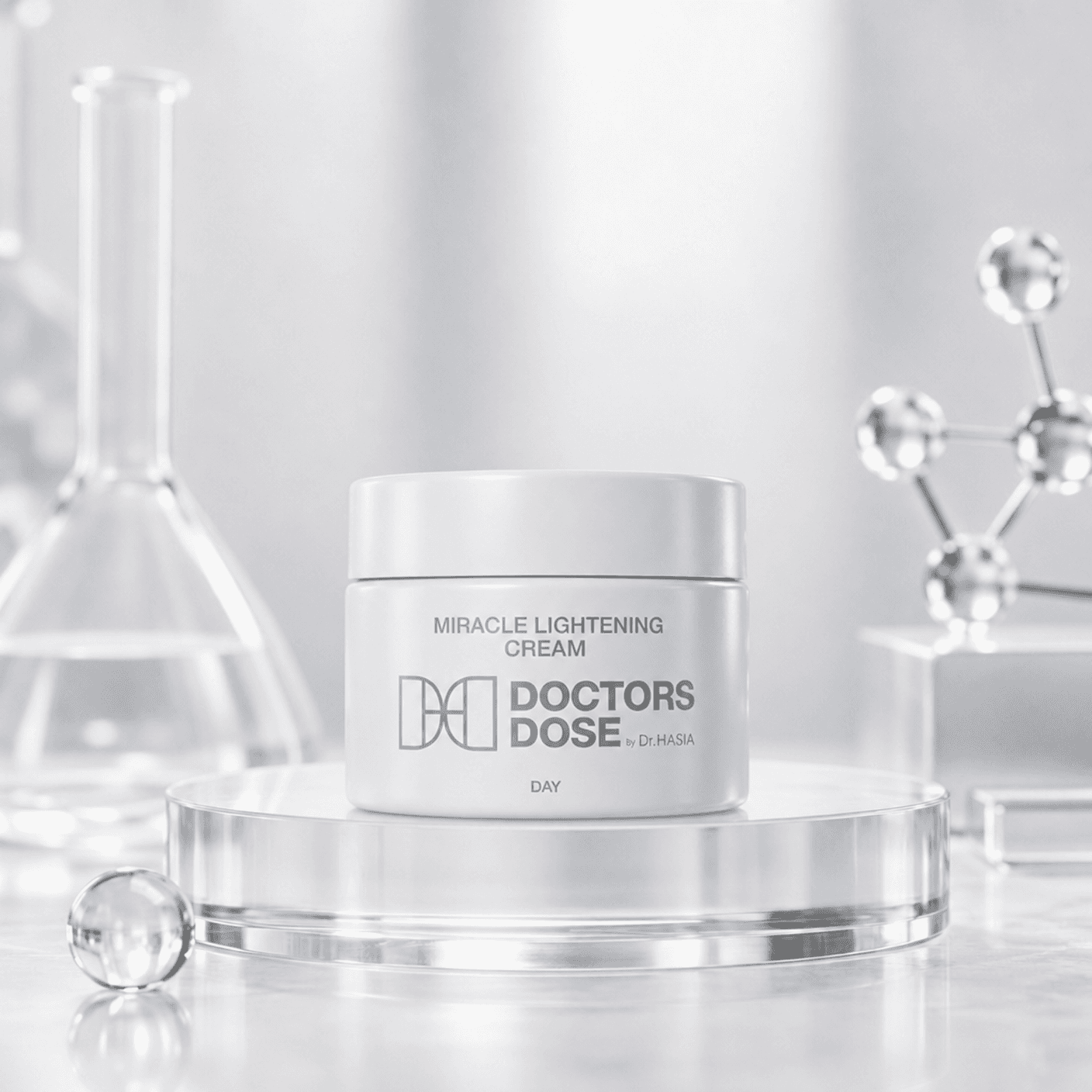
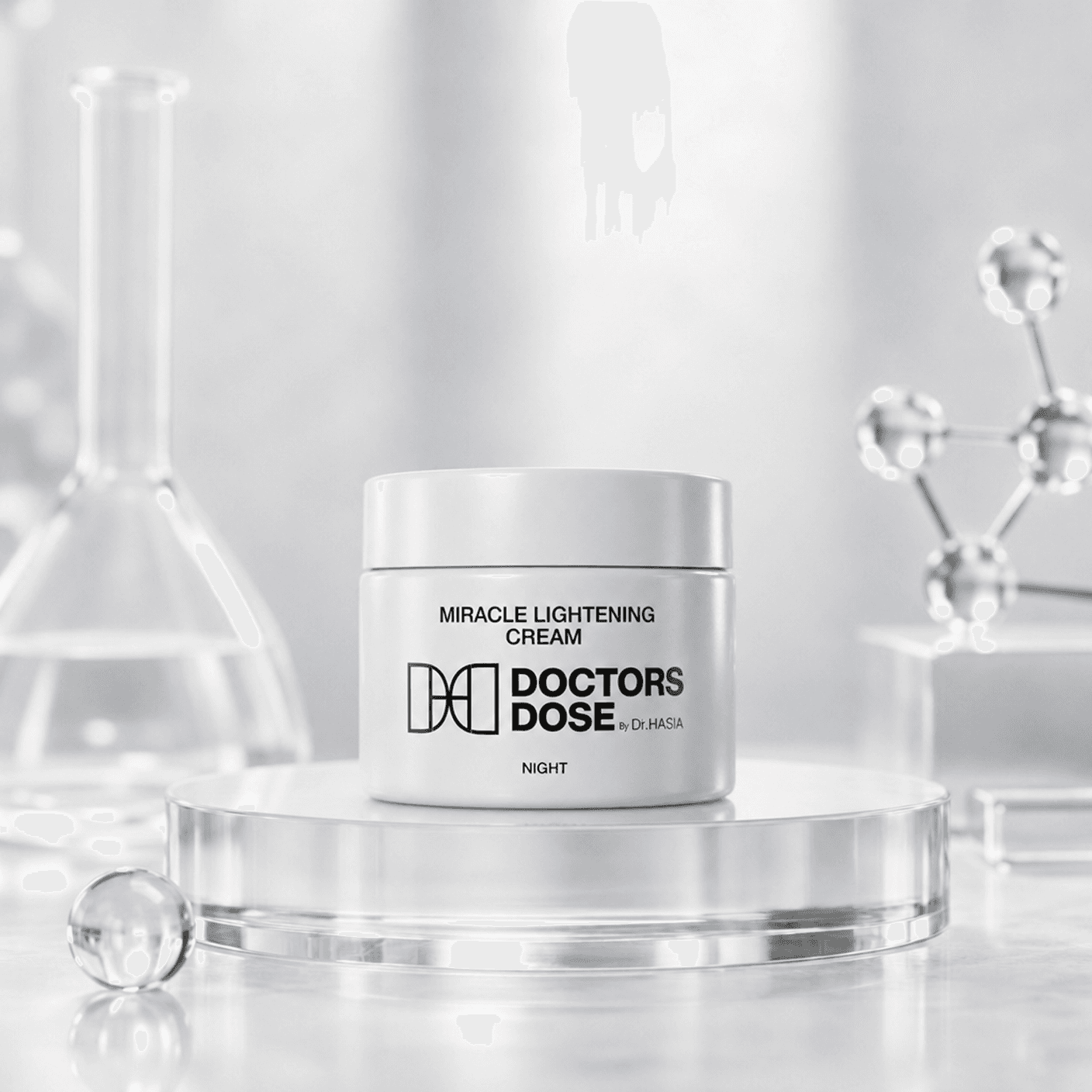
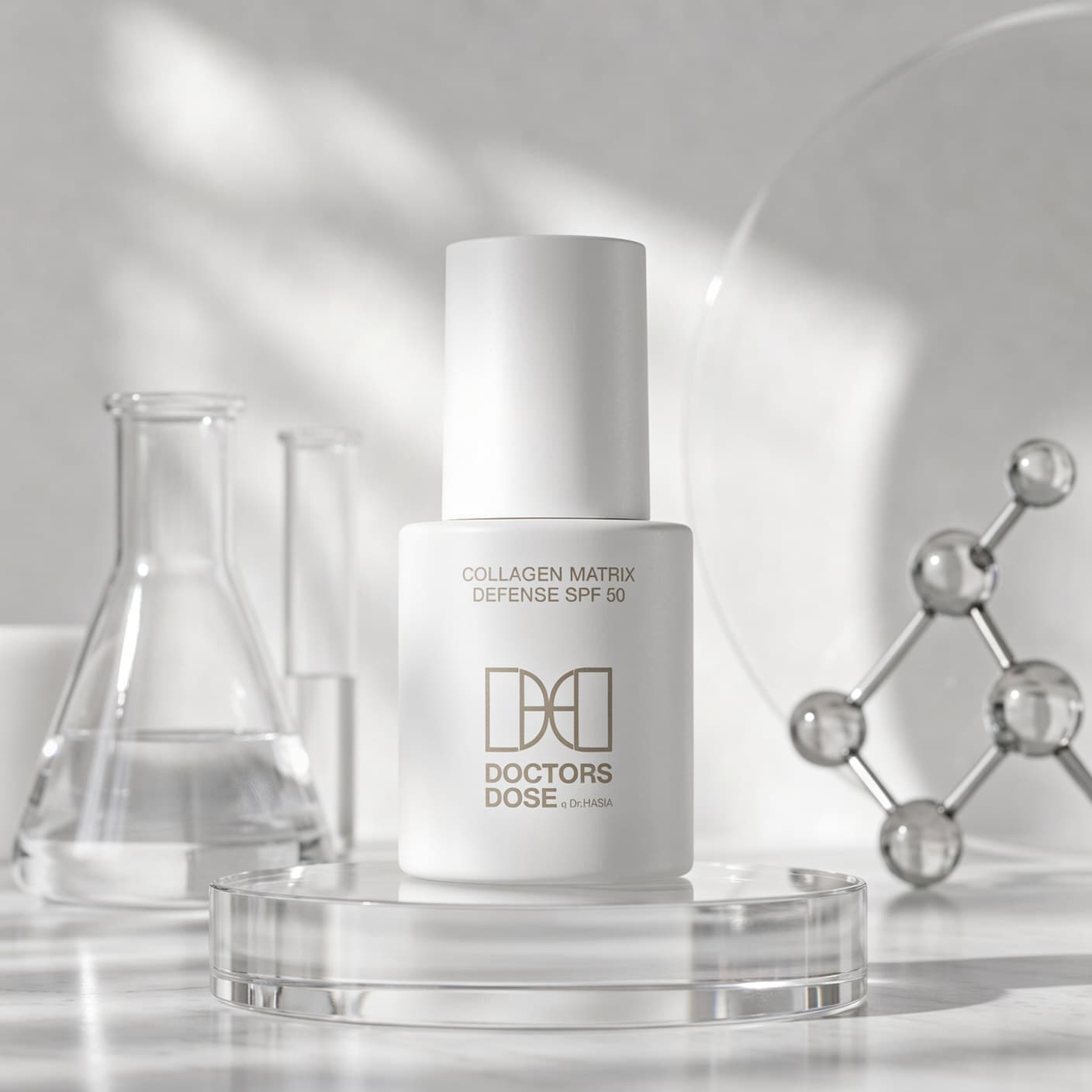
Fade & Brighten Serum is the targeted morning step — alpha-arbutin and vitamin C to address visible discolouration. Miracle Day and Miracle Night moisturise and support the barrier so the routine stays comfortable enough to keep using. Collagen Matrix Defense SPF50 is the final morning layer that protects the result.
Together these make up the Brightening Protocol. You do not have to buy the full routine at once — begin with the serum and an SPF, then add barrier support if your skin needs it.
How to choose for your skin
If your skin is reactive or new to actives, start with the serum every other morning and build up, keeping the moisturiser and SPF daily. If you also have breakouts, read the acne guide before combining treatments so you are not layering too many actives at once.
Pigmentation that is spreading, changing or present since childhood, and any mark you are unsure about, should be assessed by a medical professional before you start a cosmetic routine.